

Brain Health and Cognitive Decline: A Whole-Body Approach to Protecting Your Mind
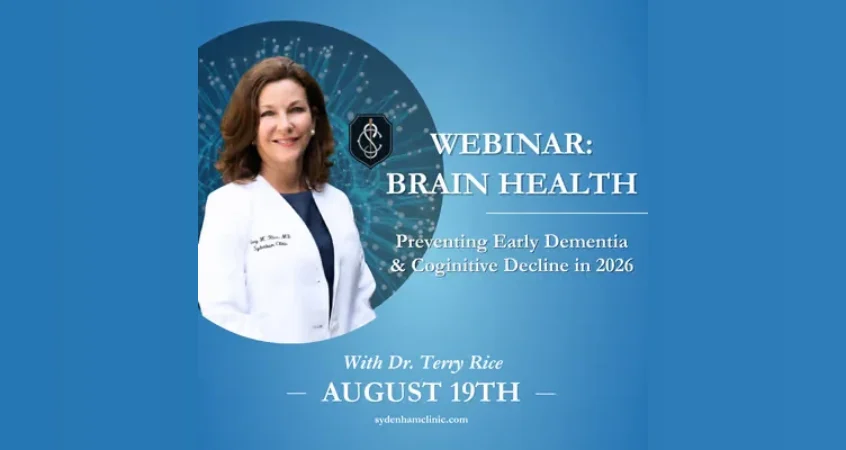
For most of us, the fear of losing our memory grows larger every day with the introduction of modern day inputs such as social media, phones, diet additives, and the like. Some believe it is unavoidable depending on your genes. Is it a matter of both? A growing body of thinking challenges that fatalism. In a recent Sydenham webinar, Dr. Terry Rice made a compelling case that brain health is far more within our influence than most people believe, and that cognitive decline is not simply a fate to await.
Dr. Rice brings decades of experience, including eleven years at MD Anderson, to a subject he now considers one of the most hopeful in medicine. The full webinar is worth watching; the summary below captures its core ideas.
Rethinking What Causes Alzheimer’s
The conventional model treats Alzheimer’s disease as the accumulation of abnormal proteins in the brain, amyloid and tau, and much of standard treatment aims to clear them. But there is another school of thought, and it reframes the whole picture.
In this view, championed by researchers like Dr. Dale Bredesen, those protein deposits are an end product rather than the root cause. The brain, as Dr. Rice puts it, is a reflection of the health of the whole body. Damage accumulates because of what is happening system-wide, and the deposits follow. It is a shift with real consequences: if the brain reflects overall health, then protecting it becomes something you can actively work on.
The Gene Worth Knowing About
No honest conversation about preventing dementia can skip genetics. Dr. Rice highlights APOE4, sometimes called the Alzheimer’s gene, a common variant present in roughly a quarter of the population. Carrying one copy meaningfully raises lifetime risk; carrying two raises it further.
Conventional medicine often argues there is little point in testing for it, since there is supposedly nothing to be done. Dr. Rice takes the opposite view: knowledge is power. Knowing your status early lets you address the very factors, cardiovascular health, inflammation, metabolic function, toxin exposure, that influence whether that genetic risk is ever expressed. The gene loads the possibility. How you live has a great deal to say about the outcome.
Not One Disease, but Several Drivers
.One of the webinar’s most useful ideas is that cognitive decline rarely has a single cause. Dr. Rice outlined several overlapping drivers, each with its own levers:
- Inflammatory – driven by an overactive immune system, infection, or autoimmune reactions.
- Atrophic – a shortage of the hormones and growth factors the brain needs to maintain itself.
- Glycotoxic – essentially insulin resistance in the brain; type 2 diabetes more than doubles the risk. Often the most reversible.
- Toxic – exposure to heavy metals like mercury, mold, and everyday chemicals in personal-care and household products.
- Vascular – poor blood flow to the brain, closely tied to heart and artery health.
- Traumatic – the cumulative effect of head injury, from contact sports to accidents.
The point is empowering rather than overwhelming: most of these drivers are things you can measure and influence, long before symptoms appear.
What You Can Actually Do
The webinar’s practical thread is that preventing Alzheimer’s looks a lot like protecting the rest of your body. Among the levers Dr. Rice discussed:
- Metabolic health: reversing insulin resistance through diet, with a ketogenic approach where cognitive decline is already present.
- Cardiovascular health: keeping blood flowing to the brain, since vascular and brain health are inseparable.
- Exercise: one of the most reliable ways to raise BDNF, described as fertilizer for the brain, encouraging new connections.
- Reducing toxic load: checking for heavy metals, and being mindful of mercury from large fish and of everyday household and personal-care chemicals.
- Hormones and sleep: supporting the systems that let the brain repair and regenerate.
Yes, none of these solutions are exactly groundbreaking – but knowing the why behind them may help you make your decisions. It is the same foundation that supports the heart, the metabolism, and the whole body, applied with the brain in mind.
How Sydenham Approaches Brain Health
This whole-body view is exactly how Sydenham is built. Rather than treating the brain as a separate organ, Sydenham reads it within the seven pillars of the Sydenham Method – genomics, sleep, gut health, hormones, nutrition, psychology, and physiology – as one connected system. Genomic testing includes a dedicated cognition panel covering APOE4 and related genes, so brain health can be assessed and acted on early, well before any symptoms.
Because every member has a dedicated physician and the practice sells no tests or supplements, the plan that follows is guided by what the data shows rather than by anything with a margin attached. The goal is the one Dr. Rice returns to throughout: not to wait and hope, but to understand your risks and act on them while the widest range of outcomes is still open.
Frequently Asked Questions
Can cognitive decline be prevented?
It cannot be guaranteed against, but a growing body of thinking holds that much of the risk is influenceable. Because brain health reflects overall health, addressing cardiovascular, metabolic, inflammatory, and toxic factors early can meaningfully affect whether genetic risk is ever expressed.
What is the APOE4 gene?
APOE4 is a common genetic variant, present in roughly a quarter of people, that raises the lifetime risk of Alzheimer’s disease, more so with two copies. Knowing your status early allows you to address the modifiable factors that influence whether that risk becomes reality.
Is Alzheimer’s caused only by amyloid?
The conventional model centres on amyloid and tau protein buildup. An alternative, functional-medicine view holds that these deposits are an end product of declining whole-body health rather than the root cause, which shifts the focus toward prevention across multiple systems.
What lifestyle factors affect brain health?
Metabolic health (insulin sensitivity), cardiovascular health, regular exercise, reduced exposure to toxins such as heavy metals, and healthy hormones and sleep all play a role. These are the same foundations that support the rest of the body, applied with the brain in mind.
How does Sydenham approach cognitive health?
Sydenham reads brain health within its seven-pillar system, includes a genomic cognition panel covering APOE4, and builds a personalised plan with a dedicated physician. Because it sells no tests or supplements, recommendations are guided by the data rather than by profit.